




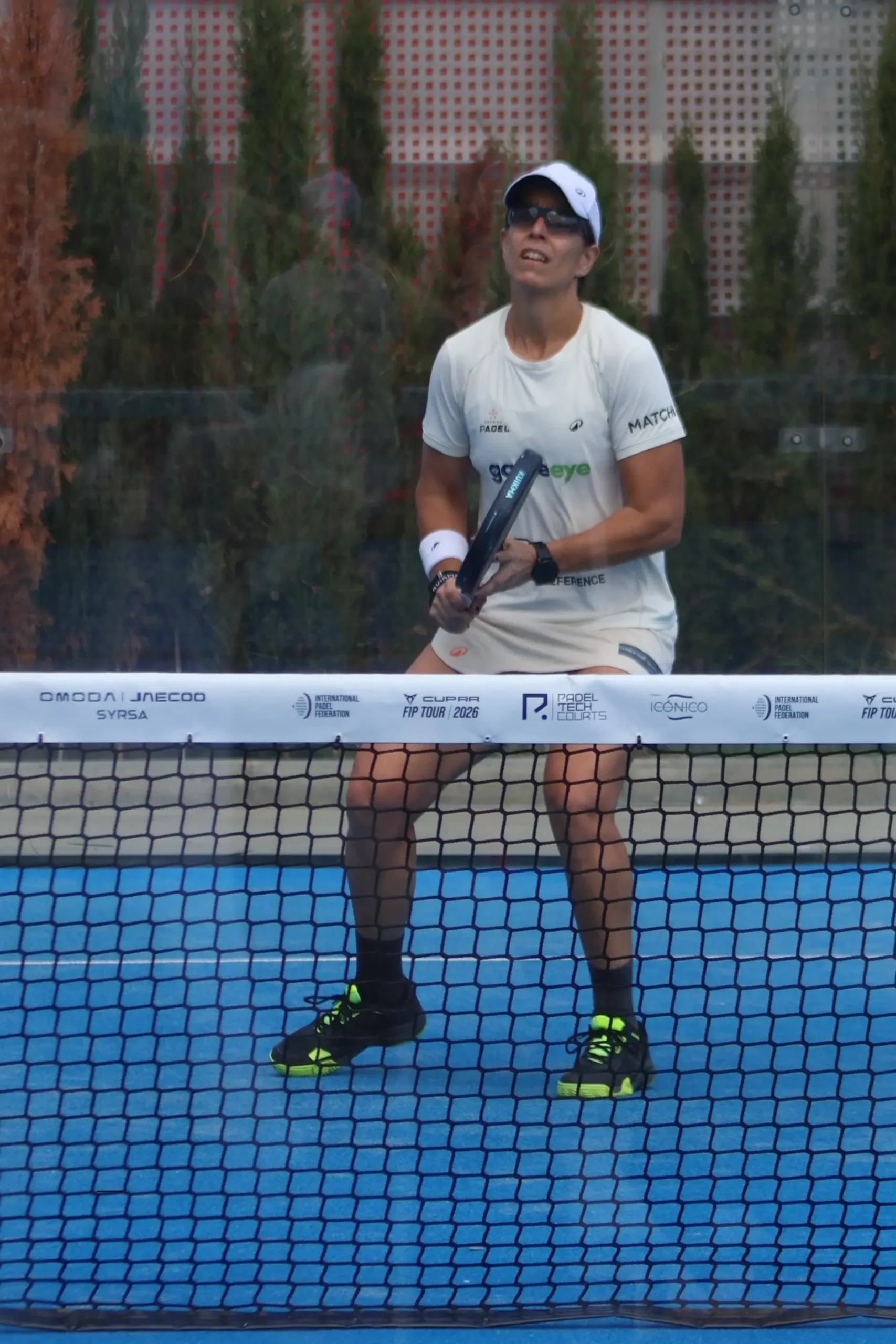
1. For how many years have you been playing Padel?
A: I’ve been lucky that my club had a padel court since I was really little, so I’ve been playing padel since I was 8 or 10, but my first sport was tennis. At first, I played more as a hobby with my parents and siblings, and then, it’s true that the person in charge of the club’s padel section would take us to the Spanish junior championships. Back then, there were eight pairs – imagine that – and it was the best weekend of the year.
2. How do you see Padel in your life: as a sport, a high-performance sport, or a profession?
A:I have gone through various phases, but right now, I see it as a profession.
3. From 1 to 8, what is the level of balance you have between your personal life and Padel?
A:Well, you would have to ask my family and my partner, because I believe it is 8 for Padel and 1 for personal life.
4. Do you consider Padel to be a team sport or an individual sport?
A: It should be a team sport or for pairs, but right now, it’s an individual sport that’s played in pairs. And I think the players who adapt sooner to the fact that it’s played as a team and that it’s a team sport will get better results..
5. How many times do you train per day?
A:Let’s see, you have to know that I’m almost a veteran. So, now I pay a lot of attention to the workout load, but usually, I train 1 hour 30 minutes or 2 hours of paddle and 1 hour or 1 hour 15 minutes of fitness.
6. Which part of the training do you like the most: physical, technical, or tactical?
A: I really like all three. What I would say I like the least is playing points in training. Over the years and, above all, thanks to Gemma Triay – who was very competitive in training –in the end I ended up liking it more. Even so, it was hard for me, but it’s true that, in order to be able to play later, you have to train it.
7. Which side of the field do you feel more comfortable playing on: left or right?
A: Well, look, I enjoy playing on the left; every time I switch to the left, my face lights up. But now I am playing on the right; I have been on the right side for years and I feel comfortable. However, I believe that on the left side I see more things, and it is very enjoyable for me.
8. Do you consider you need to improve your team play: yes or no?
A: Yes, yes, of course. I believe that I can still improve individually, that I can keep adding little things, but the collective aspect is the most important; to connect with your partner.
9. What is the technical move that you most like to use in a game?
A:I really like the backhand volley and the “chancletazo”.
10. Which technical move do you need to work on the most?
A: The vibora
11. Which part of the game do you need to understand better: defense, attack, or counterattack?
A: A bit of everything, I’d say. There’s always room for improvement. It’s true that I feel comfortable in defense; in counterattacks too… but maybe I need to understand counterattacks more like the young players do. I mean, the “chiquita” and then move up, I already do that, but they’re more reckless, and maybe that kind of counterattack is what I should be doing.
In a tournament…
12. Do you prefer to play indoors or outdoors?
A: It’s easier on an indoor court because the conditions are already known, but I think it’s fun to see how it’s played both indoors and outdoors and how the players adapt –which isn’t easy–.
13. Where do you prefer to play: on a slow, medium-fast, or fast court?
A: Medium-fast.
14. Do you prefer to play in the morning, in the afternoon, or in the evening?
A: In the morning. If it is possible, the second shift at 10 a.m. is perfect; the one at 9 a.m. is very difficult.
15. In a tournament, does training and playing on different types of courts influence your game: yes or no?
A:Yes, yes, yes, it has nothing to do with it. Besides, it’s impressive because in Premier Padel, for example, the courts, even though they’re next to each other and set up the same way, are still different, and you can’t quite understand it, but that’s what happens.
16. As a partnership, do you study your opponents before the games: yes or no?
A:Yes, the difference between now and a few years ago is that we have the possibility to study the rivals, since almost all the matches are broadcast, and that is an advantage.
17. In tournaments, do you prefer to have the presence of a coach: yes or no?
A: Yes, without a doubt. I think you’re avoiding a part that’s important and that he has to take care of.
18. When you have the coach at tournaments, what do you like to hear during the break: encouragement, constructive criticism, or tactics to apply during the game?
A: All of that. As long as it’s positive, like you said, and constructive… it doesn’t matter. In the end, the three of us have to go for the same thing, which is trying to win, no matter what.
Psychological Scope
19. In the psychological realm, what do you feel you need to work on most to improve your performance: frustration, anxiety or confidence?
A: A bit of everything. But, right now, it might be, probably, frustration.
20. What is the degree of influence that the audience has on your adrenaline: none, little, reasonable, or a lot of influence?
A: I really like that there’s an audience and that they cheer. One of the best games I remember, the ones where I say ‘Wow, that was amazing!’ was at Sant Jordi, at home, completely full. Winning there is incredible! And getting the crowd going and having people shout, I love it.
21. What degree of influence does the audience have on your concentration in the game: none, little, reasonable or great influence?
A: Well… I’m a bit scatterbrained; well, not really scatterbrained, but it’s true that I notice everything, that I look at a lot of things, and that helps me. However, I have to stay focused, and I’ve learned over the years how not to get so distracted.
22. From 1 to 8 what is your level of acceptance when the opponent sends the ball at your body?
A: Wow, now I’ve got it figured out. What frustrates me is not doing it myself.
23. From 1 to 8, what influence does a defeat have on you?
A:It depends on the defeat. Now I realize that it’s part of the game, so I’d say a 3 or a 4, for a passing grade. I might have a bad day and maybe part of the next one too, but I also move on quickly, because the bad or good thing about this is that, every day or every week, we have a new opportunity.
24. From 1 to 8, how much importance do you give to the moment of serving to close the set?
A: 8.
25. And what do you change in your behavior at that moment: self-esteem, individual concentration, group concentration…?
A: I try to focus on the first serve, since it’s really important and there are times when we don’t give it the attention it deserves.
26. How long does it take you to recover after a less positive performance: minutes, hours, days, or months?
A: It depends, but I would say that if I play in the morning, by the afternoon I’m wiped out, and depending on the loss, it used to be really hard for me to sleep. But the next day you just move on.