


POSTCARDS
FROM
ASIA

BIMONTHLY CHRONICLE

About the signature
Picture of Kristin Kirsch

Kristin Kirsch

Founder of Padel for Ladies

I am French and trained as a journalist. I initially worked as a political journalist and later in communication and crisis management. I have written about ten books (novels, short stories, political narratives). After spending several years in Faro, I now live in Vietnam; however, Portugal remains the country of my heart, and it was there that everything began with Padel.

Asia Steps onto the Court

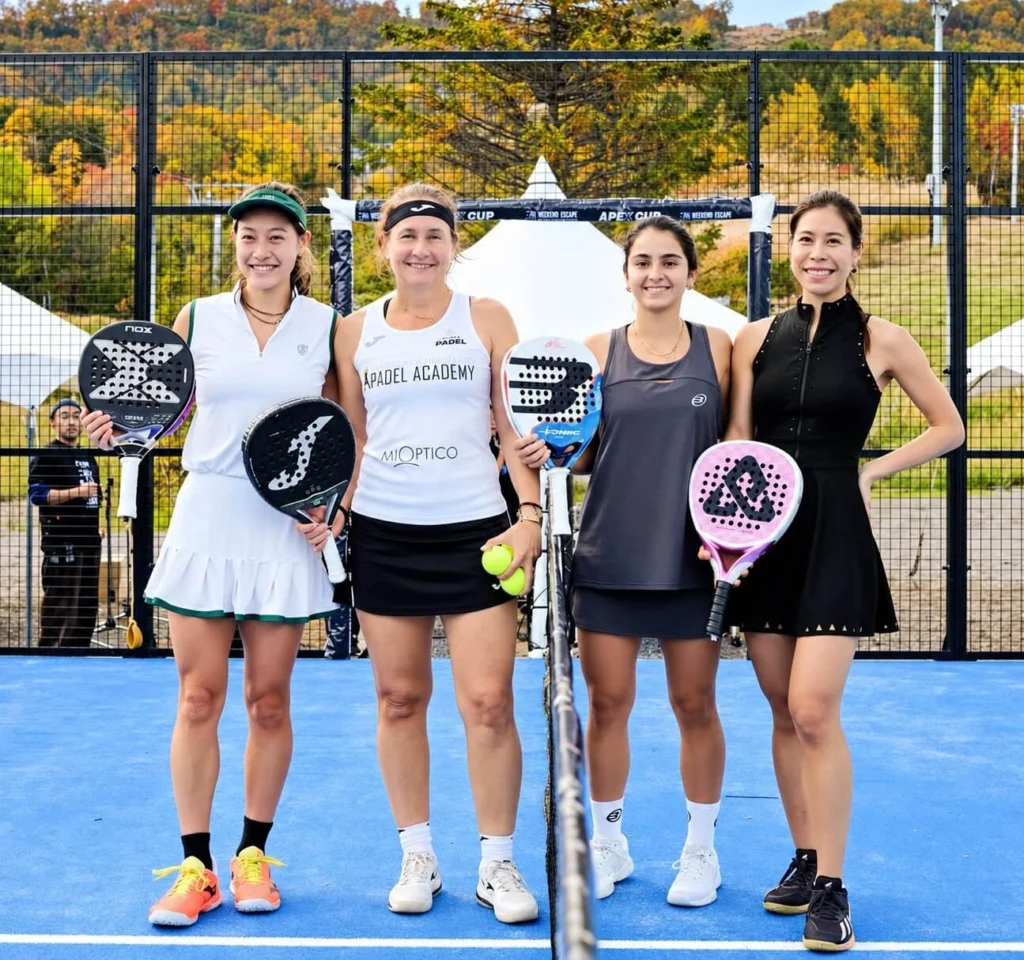
Late September, Japan. A Thai player walks onto the court. Two years earlier, in 2024, Natalie Bin Narkprasert suffered a serious knee injury. It took a relentless rehabilitation to bring her back to competition in 2025. And here she is, at the very first Asian Games in padel history.

I know Natalie well; I have faced her across the net, and her portrait is among those featured by Padel for Ladies on Instagram. A few days after the Games, she found herself in Niseko, on the island of Hokkaido, facing Carolina Navarro and Lucía Sainz. On Instagram, she writes: “Getting to play against legends like Carolina Navarro and Lucía Sainz, learning from them about how to improve my game and feeling the pressure of their shots on a golden point… truly a priceless experience.”

From an injured knee to the Asian Games, from the Games to the legends: Natalie’s journey mirrors that of padel in Asia. It is moving fast, and it belongs more and more to women.
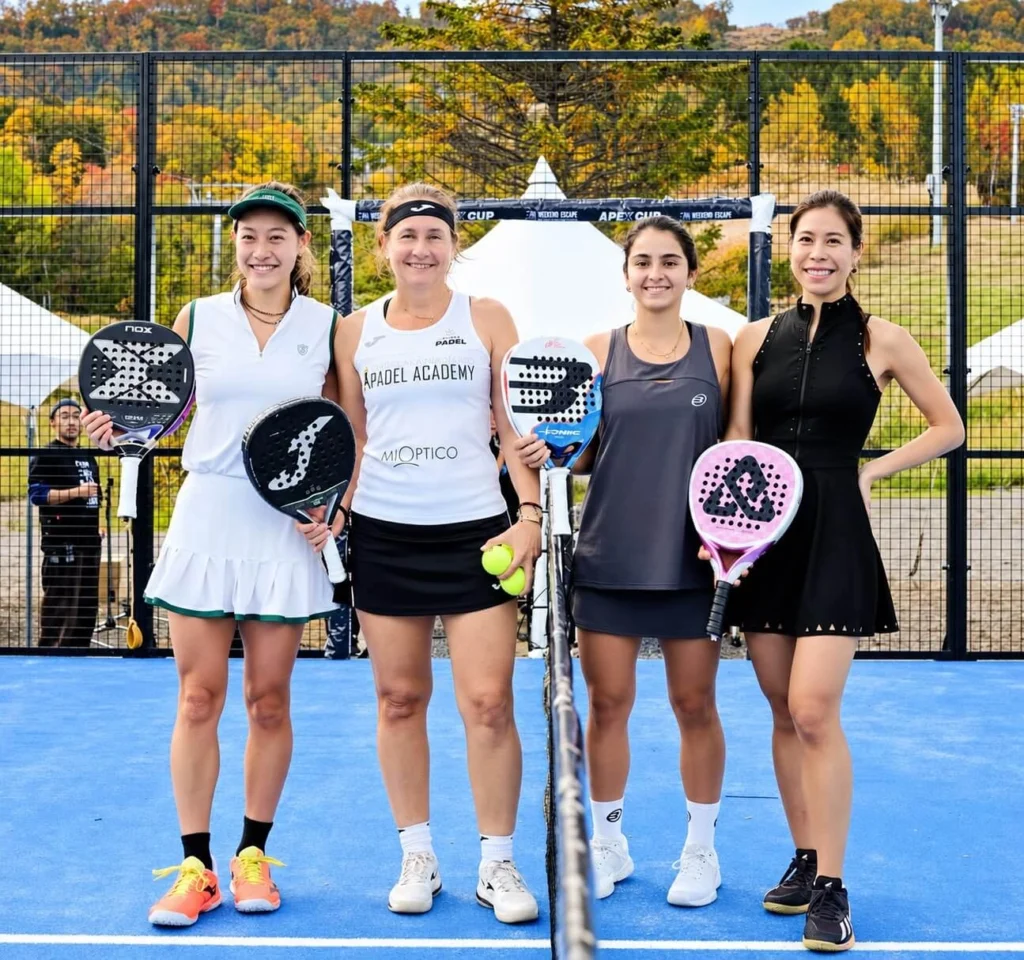
Natalie Bin (in black, on the right) playing in a tournament against Carolina Navarro
Natalie Bin (in black, on the right) playing in a tournament against Carolina Navarro | Photograph by Natalie Bin

Asia Is No Longer Watching. It Is Playing.

The numbers are staggering. According to the International Padel Federation’s World Padel Report 2026, Asia went from 1,713 clubs in 2025 to 3,221 in 2026. Almost double in a single year. Nearly four in ten new clubs opened worldwide were in Asia. Indonesia now ranks in the global top five by number of clubs, alongside Spain, Italy, Argentina and France.

Nagoya, a First Written by Women

From 28 September to 3 October, padel made its debut at the Aichi-Nagoya Asian Games. On home soil, Japan’s Kae Tokumoto and Saki Tsukamoto won the first women’s gold medal in the sport’s history, defeating Indonesia’s Fitriani Sabatini and Fadona Kusumawati. Before the final, Tokumoto summed up her philosophy: “you cannot win with power alone.” A lesson many players know by heart

Next stop: Riyadh, in December, for the Asian Indoor Games.

Niseko, Passing It On

Right after Nagoya, the first APExCup brought together international champions and Asia’s best players in Niseko, in a weekend of padel, food and music. Natalie was the only Thai player invited. She describes it as healing: after the pressure of the Games, a chance to enjoy padel again purely for the love of the game. Different countries, one shared passion; “one big obsessed padel family,” as she puts it.

Perhaps this is the true sign of maturity. When legends come to pass on what they know. When local players dare to take them on. When we play to win, and then to find each other again.

What Comes Next?

I am writing these lines from Vietnam. Here, padel is taking root quietly. A women’s community is growing, and players are arriving from pickleball with their curiosity intact. Nothing spectacular. And yet this is exactly how it all began in Spain, in Portugal, everywhere.

Every two months, I will take you onto these Asian courts. To meet the women who play, who coach, who organise. Those no one sees yet. And those everyone will soon be watching.

Kristin Kirsch, founder of Padel for Ladies
To read the content in the author's native language, click here

L’Asie entre dans la partie

Fin septembre, au Japon. Une joueuse thaïlandaise entre sur le court. Deux ans plus tôt, en 2024, Natalie Bin Narkprasert se blessait gravement au genou. Il lui a fallu une rééducation acharnée pour revenir sur les pistes en 2025. La voici aux tout premiers Jeux asiatiques de l’histoire du padel.

Je connais bien Natalie ; je l’ai affrontée sur le court, et son portrait figure parmi ceux de Padel for Ladies sur Instagram. Quelques jours après les Jeux, elle s’est retrouvée à Niseko, sur l’île d’Hokkaido, face à Carolina Navarro et Lucía Sainz. Sur Instagram, elle raconte : « Jouer contre des légendes comme Carolina Navarro et Lucía Sainz, apprendre d’elles comment améliorer mon jeu, sentir la pression de leurs coups sur un point en or… une expérience inestimable. »

Du genou blessé aux Jeux asiatiques, des Jeux aux légendes : le parcours de Natalie ressemble à celui du padel en Asie. Il avance vite, et il appartient de plus en plus aux femmes.

{%ALT_TEXT%}
{%CAPTION%}

L’Asie ne regarde plus, elle joue

Les chiffres donnent le vertige. Selon le rapport mondial 2026 de la Fédération internationale de padel, l’Asie est passée de 1 713 clubs en 2025 à 3 221 en 2026. Presque le double en un an. Près de quatre nouveaux clubs sur dix ouverts dans le monde l’ont été en Asie. L’Indonésie figure désormais dans le top 5 mondial du nombre de clubs, aux côtés de l’Espagne, de l’Italie, de l’Argentine et de la France.

Nagoya, une première écrite au féminin

Du 28 septembre au 3 octobre, le padel faisait ses débuts aux Jeux asiatiques d’Aichi Nagoya. Chez elles, les Japonaises Kae Tokumoto et Saki Tsukamoto ont remporté la première médaille d’or féminine de l’histoire, face aux Indonésiennes Fitriani Sabatini et Fadona Kusumawati. Avant la finale, Tokumoto avait résumé sa philosophie : « la puissance seule ne fait pas gagner ». Une leçon que beaucoup de joueuses connaissent par cœur.

Prochaine étape : Riyad, en décembre, pour les Jeux asiatiques en salle.

Niseko, la transmission

Juste après Nagoya, la première APExCup réunissait à Niseko des championnes internationales et les meilleures joueuses d’Asie, entre padel, gastronomie et musique. Natalie y était la seule Thaïlandaise invitée. Elle en parle comme d’un soin : après la pression des Jeux, retrouver le padel pour le seul amour du jeu. Des pays différents, une même passion ; « une grande famille obsédée de padel », écrit elle.

C’est peut être cela, le vrai signe de maturité. Quand les légendes viennent transmettre. Quand les joueuses locales osent les affronter. Quand on joue pour gagner, puis pour se retrouver.

Et maintenant ?

J’écris ces lignes depuis le Vietnam. Ici, le padel s’installe sans bruit. Une communauté féminine se construit, des joueuses arrivent du pickleball avec une curiosité intacte. Rien de spectaculaire. Et pourtant, c’est exactement comme ça que tout a commencé en Espagne, au Portugal, partout.

Tous les deux mois, je vous emmènerai sur ces courts asiatiques. À la rencontre de celles qui jouent, qui entraînent, qui organisent. Celles que personne ne voit encore. Et celles que tout le monde verra bientôt.

Kristin Kirsch, fondatrice de Padel for Ladies

Crea una cuenta gratuita o inicia sesión.

Consigue acceso para leer este artículo, además de contenido gratuito limitado.

¡Sí! Me gustaría recibir nuevos contenidos y novedades.

Thanks for your subscription!

Keep an eye on your email:
we’ll send you notifications so you can stay updated on the latest news.