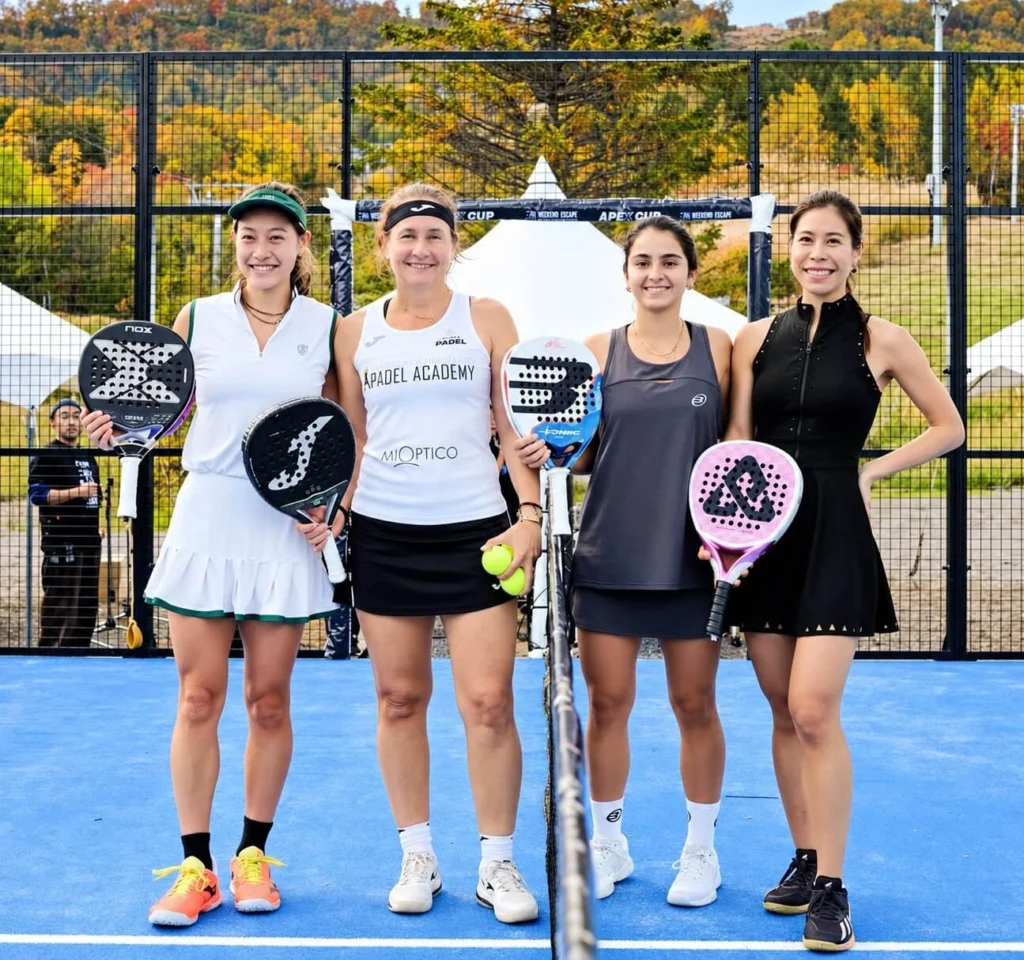

Late September, Japan. A Thai player walks onto the court. Two years earlier, in 2024, Natalie Bin Narkprasert suffered a serious knee injury. It took a relentless rehabilitation to bring her back to competition in 2025. And here she is, at the very first Asian Games in padel history.
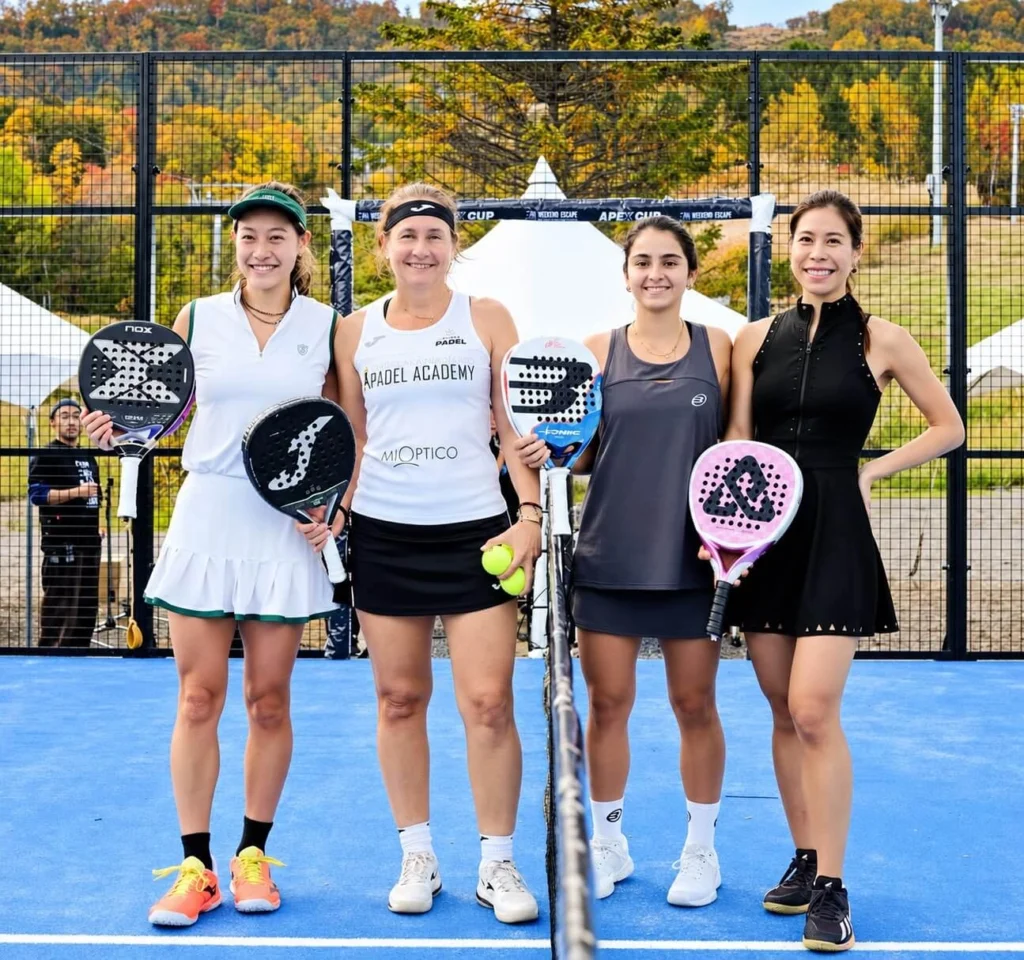
I know Natalie well; I have faced her across the net, and her portrait is among those featured by Padel for Ladies on Instagram. A few days after the Games, she found herself in Niseko, on the island of Hokkaido, facing Carolina Navarro and Lucía Sainz. On Instagram, she writes: “Getting to play against legends like Carolina Navarro and Lucía Sainz, learning from them about how to improve my game and feeling the pressure of their shots on a golden point… truly a priceless experience.”
From an injured knee to the Asian Games, from the Games to the legends: Natalie’s journey mirrors that of padel in Asia. It is moving fast, and it belongs more and more to women.
Asia Is No Longer Watching. It Is Playing.
The numbers are staggering. According to the International Padel Federation’s World Padel Report 2026, Asia went from 1,713 clubs in 2025 to 3,221 in 2026. Almost double in a single year. Nearly four in ten new clubs opened worldwide were in Asia. Indonesia now ranks in the global top five by number of clubs, alongside Spain, Italy, Argentina and France.
Nagoya, a First Written by Women
From 28 September to 3 October, padel made its debut at the Aichi-Nagoya Asian Games. On home soil, Japan’s Kae Tokumoto and Saki Tsukamoto won the first women’s gold medal in the sport’s history, defeating Indonesia’s Fitriani Sabatini and Fadona Kusumawati. Before the final, Tokumoto summed up her philosophy: “you cannot win with power alone.” A lesson many players know by heart
Next stop: Riyadh, in December, for the Asian Indoor Games.
Niseko, Passing It On
Right after Nagoya, the first APExCup brought together international champions and Asia’s best players in Niseko, in a weekend of padel, food and music. Natalie was the only Thai player invited. She describes it as healing: after the pressure of the Games, a chance to enjoy padel again purely for the love of the game. Different countries, one shared passion; “one big obsessed padel family,” as she puts it.
Perhaps this is the true sign of maturity. When legends come to pass on what they know. When local players dare to take them on. When we play to win, and then to find each other again.
What Comes Next?
I am writing these lines from Vietnam. Here, padel is taking root quietly. A women’s community is growing, and players are arriving from pickleball with their curiosity intact. Nothing spectacular. And yet this is exactly how it all began in Spain, in Portugal, everywhere.
Every two months, I will take you onto these Asian courts. To meet the women who play, who coach, who organise. Those no one sees yet. And those everyone will soon be watching.
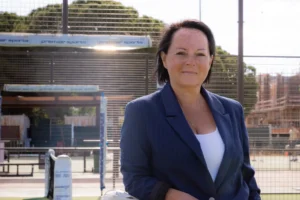
Kristin Kirsch, founder of Padel for Ladies