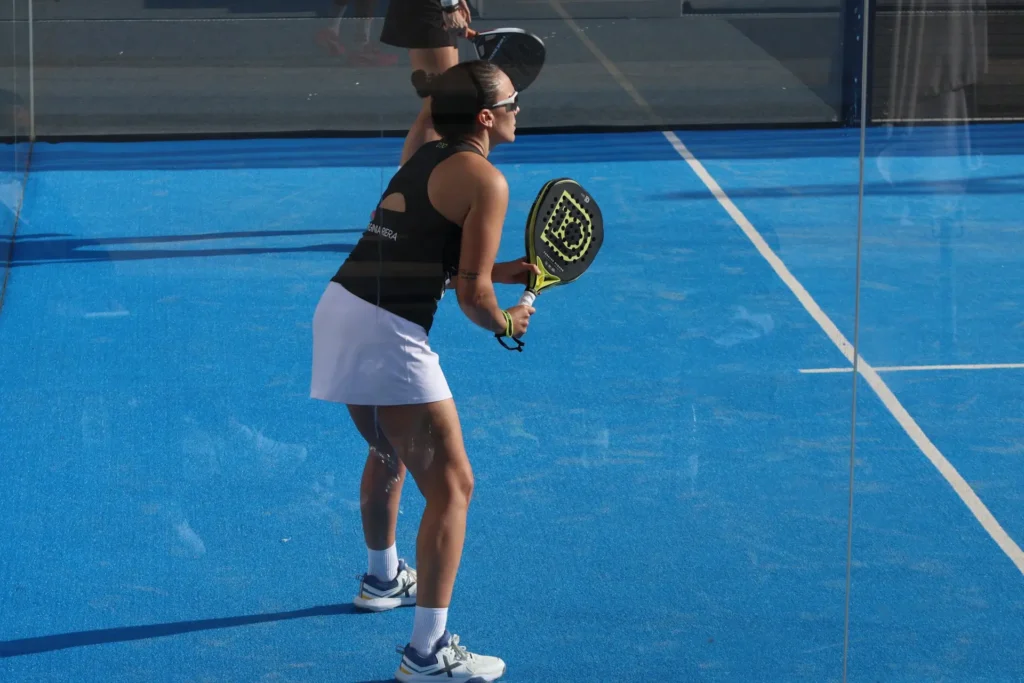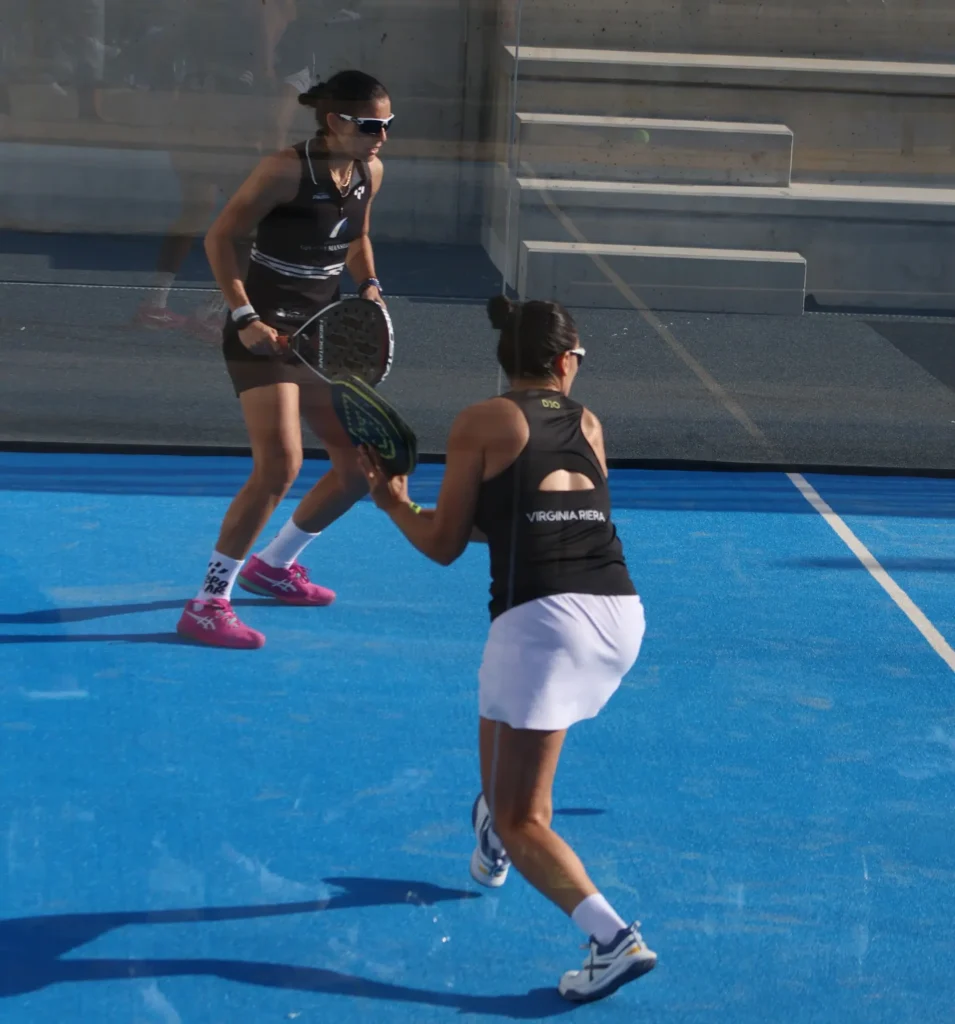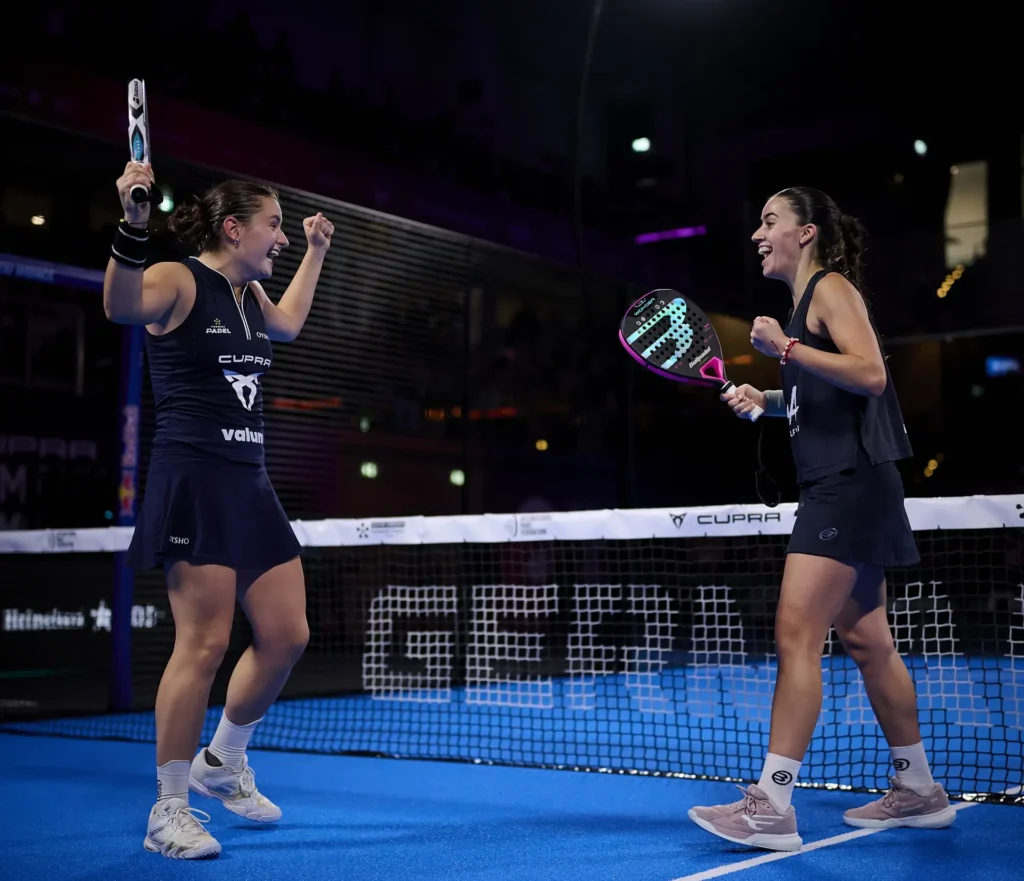

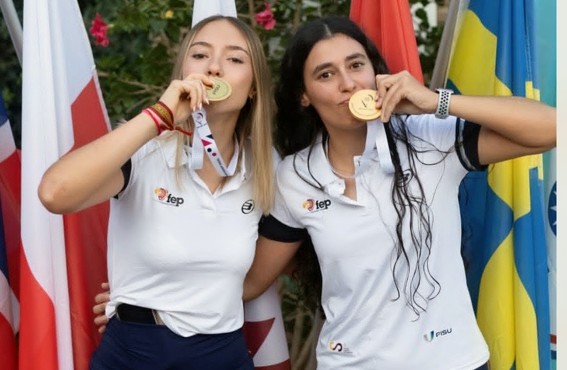
Málaga once again became the official capital of padel, although this time it was the turn of the university category. From July 7 to 11, the Andalusian city was the chosen venue to host the first edition of the University World Padel Championship, where the Spaniards Laura Luján (Seville, 2005) and Águeda Pérez (Madrid, 2007) were declared winners.
Fulfilling their role as favorites, Luján and Pérez defeated their compatriots Ana Domínguez (Barcelona, 2005) and Ana Cristina Sánchez (Madrid, 2005) in the final with a decisive 6-2, 6-2 score. “We are very happy because we achieved the goal we had set,” stated the Sevillian, currently ranked 45th in the FIP ranking and a medical student.
The World Cup marked the first time that both players shared the court as a pair. “It was a very nice experience to wear the Spain uniform again. Moreover, we got along very well from the beginning. Águeda is very aggressive, so we complemented each other very well,” Luján emphasized about Pérez, ranked number 39 in the FIP rankings.

But the achievement of this pair was not the only novelty. The tournament itself also represented a milestone in the internationalization of this sport. One year after the International University Sports Federation (FISU) recognized Padel as an official modality, International Padel Federation (FIP) and University of Málaga (UMA) joined efforts to promote a competition that strengthens the global growth of the modality.
During the 5 days of competition, the facilities of PSM Fantasy brought together 121 university players from more than twenty countries. In total, 88 pairs participated – 30 male, 28 female, and 30 mixed – in addition to 36 members of technical teams. A representation that ranged from already established powerhouses, such as Spain, Argentina, France, and Italy, to countries where padel is still making its way, such as Egypt, Lebanon, or Moldova.
Beyond international exposure, the tournament stood out for demonstrating that it is possible to achieve a balance between personal life and professional sports. This was shown by several of the participants, regulars on the professional padel circuit and at the same time capable of maintaining a firm commitment to their studies. Aware that life is constantly in motion and that circuits like Premier Padel may even disappear, this championship demonstrated that it is feasible to build a sports career without giving up university studies.